by: Byron Merano
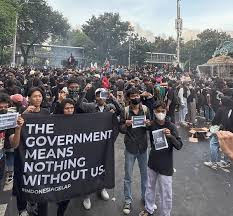
Unrest in Indonesia and pervasive corruption in the Philippines, particularly within the Department of Public Works and Highways (DPWH), reveal a troubling shared narrative in Southeast Asia: public anger over elite misconduct and a lack of accountability. While the specific triggers and forms of protest may differ, both nations demonstrate how deeply entrenched corruption can erode public trust and ignite widespread dissent.
Unrest in Indonesia: The Spark of Public Outrage
Recent protests in Indonesia have been sparked by public fury over perceived government insensitivity and elite privilege. A key catalyst has been the discovery of lavish housing allowances for parliament members, which are nearly 10 times the minimum wage in Jakarta, a city grappling with a rising cost of living. This has been seen as a symbol of “corrupt elites” benefiting at the expense of ordinary citizens. The protests escalated into violence following the death of a young delivery driver who was killed by an armored police vehicle during a demonstration, further fueling public resentment toward the security forces. The targeting of politicians’ homes and government buildings in the unrest highlights the deep-seated anger and the public’s desire to reclaim what they feel has been stolen by a corrupt system.
Corruption in the Philippines: The DPWH’s “Ghost Projects”
In the Philippines, a similar frustration is being channeled into public outrage over widespread corruption in government-funded infrastructure projects. The Department of Public Works and Highways (DPWH) is at the center of a major scandal involving billions of pesos in “ghost projects” and substandard construction. Investigations have revealed that a small number of favored contractors have cornered a disproportionate share of contracts, with as much as 60% of project budgets being siphoned off through corrupt schemes. This has led to the construction of flimsy flood control structures that fail after a single storm, leaving communities vulnerable. This is not just a financial crime; it’s a matter of public safety, as the misappropriated funds were meant to protect citizens from increasingly severe flooding. The public has responded with “novel forms of protest” on social media, publicly shaming politicians and their associates, demonstrating a direct link between corruption and a crisis of public trust.
A Shared Story of Discontent
The similarities between Indonesia’s unrest and the Philippines’ corruption crisis are striking. In both cases, public anger is rooted in a fundamental betrayal of trust. The opulent lifestyles of political elites, flaunted openly on social media and through lavish perks, stand in stark contrast to the daily struggles of citizens. This disparity is not merely an economic issue but a moral one. The protests in Indonesia, while more violent and street-based, and the social media-driven outrage in the Philippines both serve as a powerful rebuke against a system perceived to be rigged in favor of the few. They are a testament to the fact that when governments fail to address corruption and prioritize the needs of their people, the resulting public discontent can become a powerful force for change. The incidents serve as a cautionary tale for governments across the region, demonstrating that a lack of accountability and transparency can lead to social and political instability.
You can learn more about the Philippine flood control controversy in this video from the Senate of the Philippines: Top contractors deny hand in ‘ghost’ flood control projects.
Top contractors deny hand in ‘ghost’ flood control projects | Philippines Senate | Manila







Leave a comment