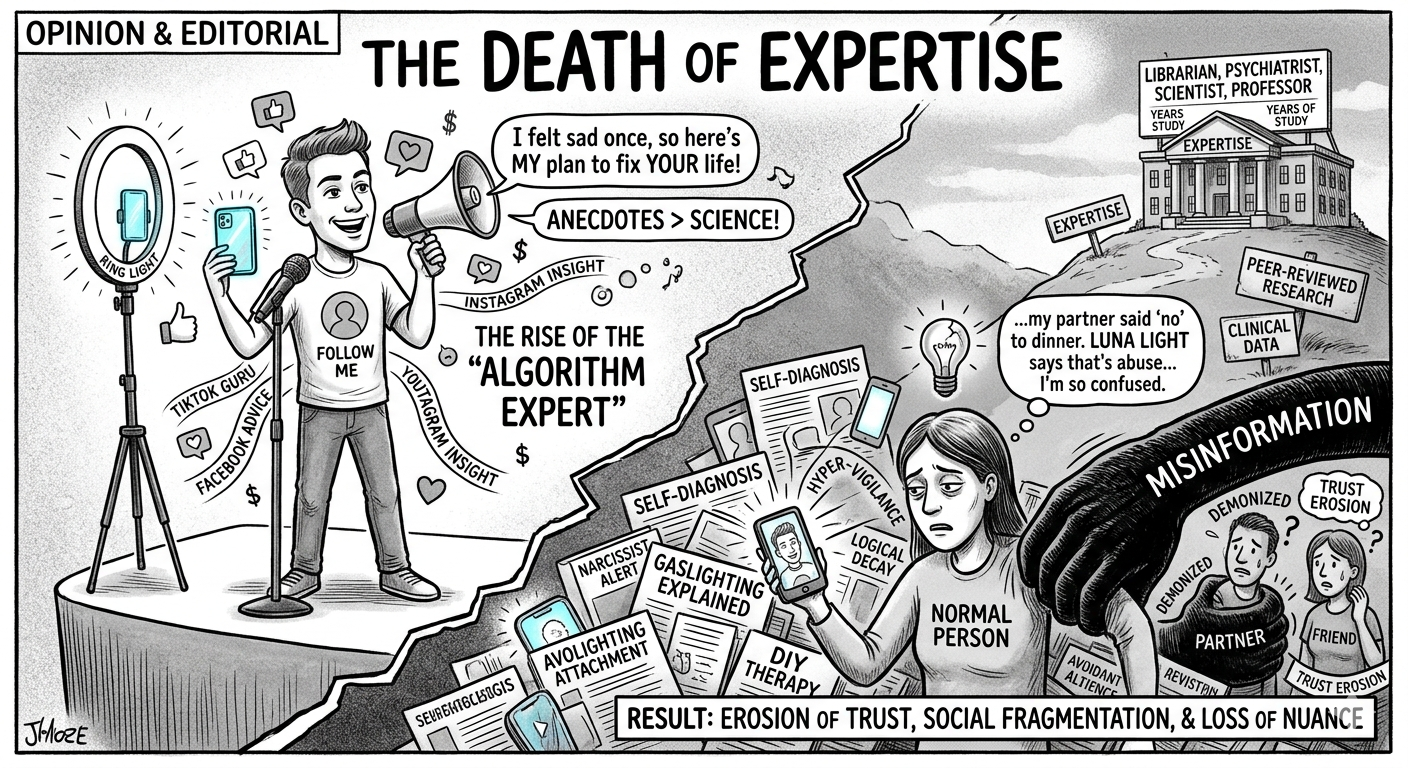
In today’s digital world, something worrying is happening to how we understand mental health. The old respect for real expertise—built on years of study, clinical experience, and careful research—is quietly dying. It’s being replaced by whoever gets the most likes, shares, and views on TikTok, Instagram, and YouTube.
What used to be a concern for academics has now become a real public health issue, especially in psychology and psychiatry. Serious clinical terms are being stripped of their meaning and turned into viral ammunition.
The Business of Emotional Manipulation
These days, an influencer filming in their bedroom with good lighting often feels more trustworthy to people than a psychiatrist who’s spent decades in training. Many of these creators have zero formal education in mental health, yet they speak with total confidence.
They know exactly who their audience is: people who are hurting, confused, or looking for answers. They serve up emotionally charged videos that feel validating in the moment but rarely encourage real understanding. The goal isn’t helping viewers heal—it’s keeping them watching, sharing, and buying whatever the influencer is selling. The real human cost of their content? Often an afterthought, as long as the engagement numbers stay strong.
When Clinical Terms Become Casual Weapons
The most damaging part is how clinical language is being hijacked. Terms like “narcissist,” “BPD,” “gaslighting,” or “avoidant attachment” used to mean something very specific. Now they’ve become trendy buzzwords thrown around far too casually.
What once required months of professional observation and careful assessment is now reduced to a quick label:
- A partner who sets a boundary you don’t like? Suddenly they’re a “narcissist.”
- A parent who has their own coping struggles? They get tagged with “BPD traits.”
- Any normal disagreement or imperfect behavior gets reframed as “abuse” or “toxicity.”
Instead of seeing people as complex human beings with their own stresses and flaws, we’re encouraged to reduce them to a diagnosis we heard in a 60-second video. This makes it easier to “discard” people rather than work through real relationship challenges.
The Real-World Damage
This shift is creating a culture of hyper-vigilance and distrust. Even people who were never particularly anxious about mental health are now scanning every interaction for “red flags” and “toxic traits.”
The result is troubling:
- Every small behavior gets over-analyzed and pathologized.
- We start seeing people in black-and-white terms: victim or villain, with no room for nuance.
- Emotional gut feelings from a viral post start overriding logic, evidence, and context.
Genuine connection becomes much harder when we’re constantly on guard, waiting for someone to reveal their “disorder.”
Bringing Back Balance
Expertise isn’t about gatekeeping or elitism. It’s about safety and accuracy. Trained clinicians learn to look at patterns over time, consider full histories, and understand context—things a short-form video algorithm simply can’t do.
Relatability doesn’t equal qualification. A compelling story or a charismatic delivery doesn’t make someone a mental health expert.
We need to remember that real psychological understanding is about humanizing people, not weaponizing clinical terms to win arguments or grow a following. If we don’t push back against this trend, we risk turning our closest relationships into battlegrounds of misapplied labels and misplaced certainty.
https://thefederalist.com/2014/01/17/the-death-of-expertise



Leave a comment