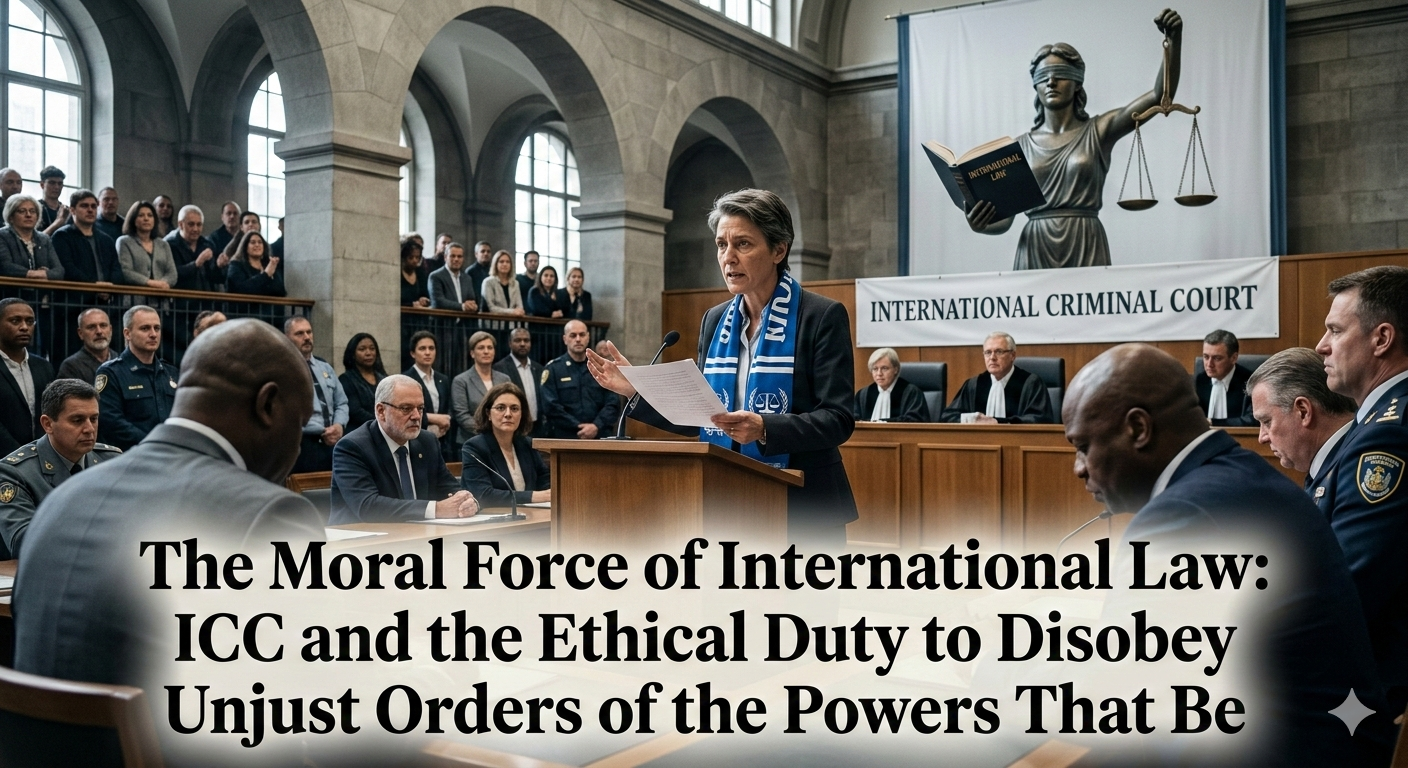
I fully concur with the PDI report (Feb. 15th), “ICC to PH law enforcers: ‘Just following orders’ won’t shield you from justice” of the Rights Report Philippines that “the era of impunity may have ended”.
Indeed, it has been the consistent and firm contention of this writer all throughout these years that it should not only be Mr. Duterte and his prime cohorts that the International Criminal Court (ICC) must bring to the bar of justice with regard to their bloody and nefarious roles in their utterly diabolical and evil so-called War on Drugs but undeniably the pursuit of justice must also includes all those who are responsible. Though it is beyond dispute that it was Mr. Duterte who was the active and central force, nay the evil mastermind; however the “Common Plan” as stated by the Office of the Prosecutor in the document entitled Public Lesser Redacted Version of “Document Containing the Charges”, 4 July 2025, ICC-01/21-01/25-178-Con which named eight (8) Co-Perpetrators will not be realized without their willing participation and/or collaboration.
Mr. Duterte and these eight individuals
I will argue that these nine characters are merely the tip of the iceberg. The fact that the ICC have named them has in a sense opened a pandora’s box, so to speak. More heads will roll and more names and individuals will be pointed. I call on the Office of the Prosecutor that even those who morally, politically and academically supported the War on Drugs must be name on the list of principals (direct perpetrators/inducers), accomplices (helpers), and accessories (post-crime assistants, blind defenders and fanatical cult supporters) – whether they belong in the public domain or private sphere, whether they are government officials, private individuals, “academics”, celebrities, trolls and zombies.
The War on Drugs
The War on Drugs that begun as a local thing has evolved into a national scope. The brutal regime of Mr. Duterte has enabled almost all the institutions of the “government”. During his evil reign it has become not merely as a state policy but a systemic program of death. That is why, it is not shocking to see two (2) incumbent senators in the list, a former “Justice” Secretary and almost all branches of the police force.
Consistent with my argument above, the Office of the Prosecutor of the ICC must also name the government institutions and the courts that did not do their duty during the bloody and dark years of the Duterte regime.
To reiterate what I say then: The ICC ruling reiterates the universal principle that crime does not pay, and that no evil action goes unpunished. Furthermore, this trial will help to expand cosmopolitan norms, institutionalize them, strengthen the scope of international laws, and perhaps serve as a warning to all tyrants, authoritarians, and dictators that the long arm of the law will one day catch up on them. (ICC ruling is hope for humanity’s quest for justice, PDI, July 29, 2023).
And in my recent piece, Light and justice vs darkness and tyranny, PDI, April 17, 2025: In the words of forensic expert, Dr. Raquel Fortun: “We have very weak institutions [and] unqualified people. We have a law that’s so ancient, and here comes a madman, ascending to the top as president, and I think he just took advantage.” Nonetheless, crime does not pay and no authoritarianism, fascism, or dictatorship lasts forever.
Professor Seyla Benhabib argued in her book, “The Rights of Others” (2004) that: “The concept of crime against humanity … stipulates that there are certain norms in accordance with which state officials as well as private individuals are to treat one another, even, and precisely, under conditions of extreme hostility and war. Ethnic cleansing, mass executions, rape, and cruel and unusual punishment of the enemy, such as dismemberment, which occur under conditions of a ‘widespread or systematic attack,’ are proscribed, and all can constitute sufficient grounds for the indictment and prosecution of individuals who are responsible for these actions, even if they are or were state officials, or subordinates who acted under orders.
“The refrain of the soldier and the bureaucrat—’I was only doing my duty’—is no longer an acceptable ground for abrogating the rights of humanity in the person of the other—even when, and especially when, the other is your enemy.” Hence, the right thing to do for all law enforcers is to enforce the law without fear or favor and to defy unjust orders.
On the Bastardized Decolonial Stand
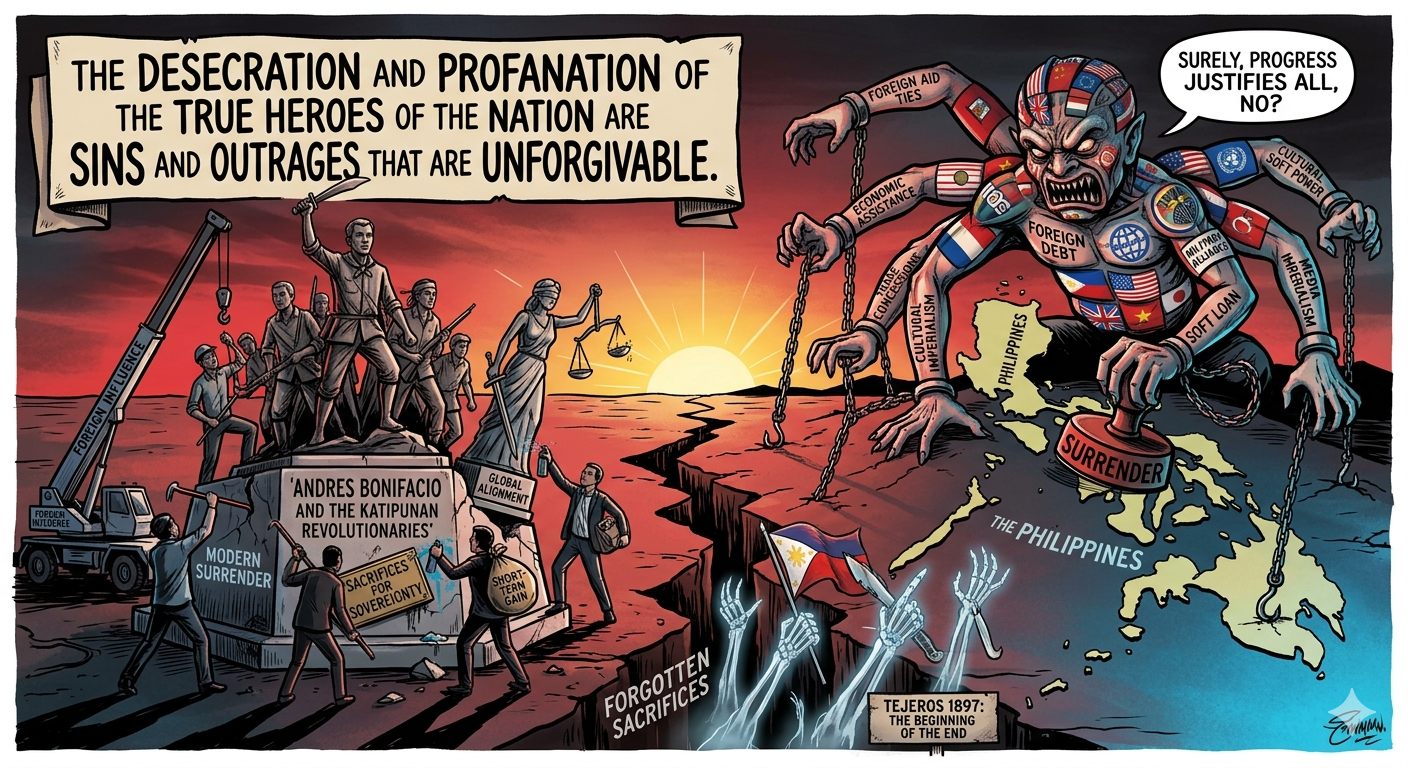
This writer has consistently argued that a morally legitimate and ethically consistent anti-colonial stance must be founded on justice, freedom, and the dignity of all people. By asserting that any political philosophy “must side on the victims and not on the violators,” it is my contention that I have effectively salvaged and reclaims the true and genuine decolonial project for the cause of human rights and universal justice. This move is both philosophically robust and politically potent, as it challenges the “pseudo-patriots” and “so-called ‘academics’” who try to dastardly reconcile their purported anti-imperialism with the defense of an oppressive regime. In the end, I will argue that I have provided a powerful ethical framework for evaluating populist-nationalist defenses against international accountability, making a persuasive case that true decolonization aligns with, rather than opposes, the principles of universal justice – consistent with the Katipunan’s Kartilya tenet number 8: “Defend the oppressed and fight the oppressor before the law or in the field.”
Jose Mario D. De Vega
PhD student
Philippine Studies
Asian Center
University of the Philippines Diliman



Leave a comment