A Tale of Two Systems: Justice and Impunity in Asian Megacities
Byron Merano
By Byron Merano
The recent waves of high-profile legal battles across Asia offer a striking contrast: on one side, swift and severe state action against powerful wrongdoers, and on the other, the slow, agonizing paralysis of justice for the politically connected. The narrative starkly illustrates how the same forces of greed and corruption are met with dramatically different institutional responses, laying bare a troubling truth about where political power truly lies.
Swift Retribution vs. Elusive Justice
In Vietnam, the world watched as real estate mogul Trương Mỹ Lan of the Van Thinh Phat Group faced a death sentence for her role in the country’s largest financial fraud, siphoning billions of dollars from the Saigon Commercial Bank (SCB). Her conviction in April 2024, though later commuted to life imprisonment after Vietnam updated its Penal Code to abolish capital punishment for property crimes, delivered a clear message: even at the apex of the business elite, the state’s anti-corruption “blazing furnace” (đốt lò) operates with lethal intent. While her sentence was reduced in mid-2025, it came with a colossal condition: she must repay a significant, often impossible, portion of the embezzled funds to be considered for further clemency.
Similarly, in Hong Kong, following a devastating high-rise fire believed to be fueled by flammable, non-regulation construction materials, authorities acted with remarkable speed. Multiple suspects, including contractors and consultants, were immediately arrested on suspicion of manslaughter by gross negligence and for alleged corruption in using substandard products. The immediate and focused crackdown sent an unmistakable signal about accountability for public safety and corporate negligence.
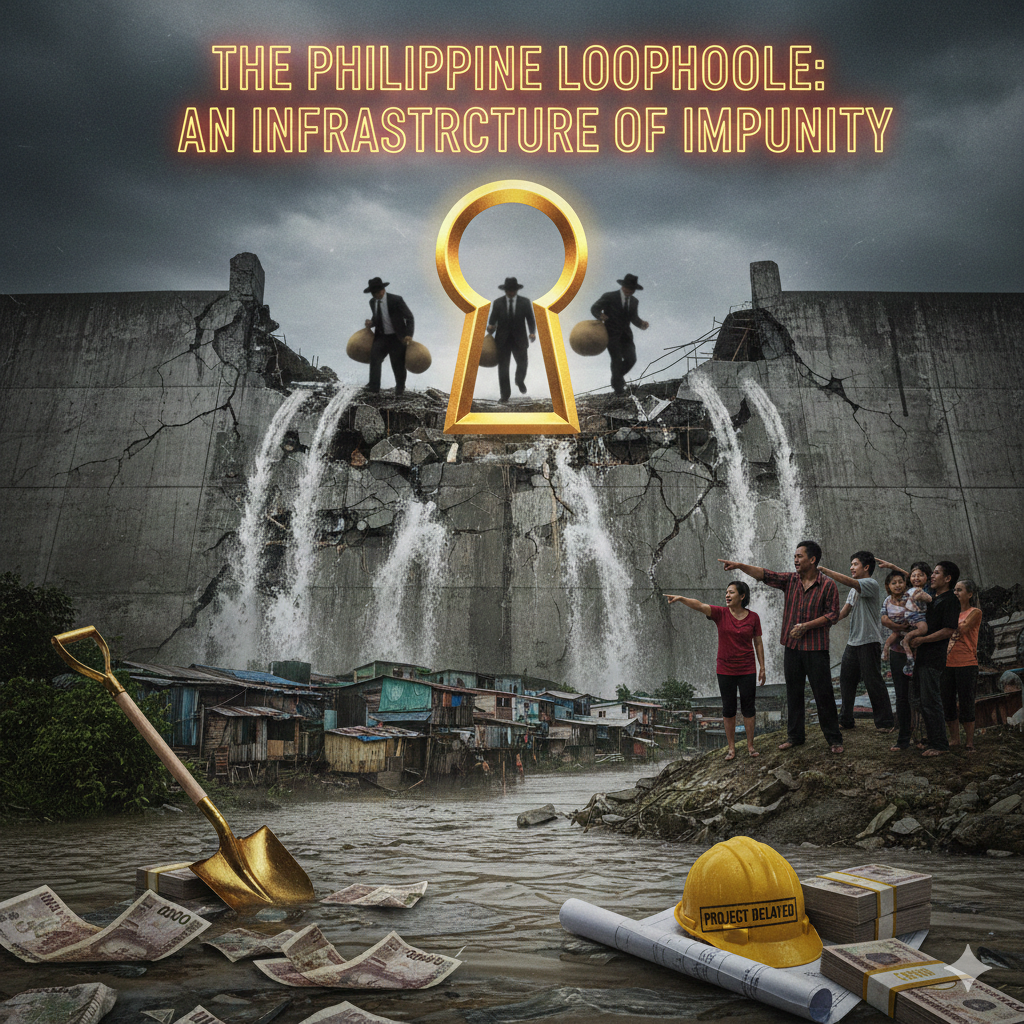
The Philippine Loophole: An Infrastructure of Impunity
The situation in the Philippines, however, offers a bleak counter-narrative, where justice remains an elusive concept for those in power.
The ongoing scandal involving billions of pesos siphoned from flood control projects—funds meant to protect citizens from climate disasters—has been met not with decisive arrests, but with protracted hearings and procedural delays. High-profile figures, including former congressman Zaldy Co and construction magnates like the Discaya couple, whose firms have cornered billions in public works contracts, have become the face of this systemic impunity.
Despite public outcry and multiple Senate hearings revealing a sophisticated system of “ghost projects,” fake completion reports, and alleged massive kickbacks, the actual movement toward lasting justice is glacial. While charges have been filed by the Ombudsman against officials and private individuals, and the Discayas’ assets—including luxury vehicles—have been frozen and their corporate registrations revoked, the powerful contractors have, until recently, managed to avoid actual jail time. The cycle is a familiar one: a burst of public attention, an investigation, and then the long, quiet grind of the legal system, which often sees cases against the politically connected dismissed or indefinitely delayed.
The Decadence Paid by the Working Class
The corruption goes far beyond flood control. Public works projects, including the construction of schools, roads, and highways, have repeatedly become mechanisms to divert funds, lining the pockets of a select few politicians and their contractor allies. This siphoning of the national treasury is more than just financial theft; it is a fatal betrayal of the common working person.
Every peso funneled into the decadence of the political-contractor oligarchy—the luxury cars, the properties, the hidden wealth—is a peso stolen from the nation’s capacity to build, educate, and protect. It represents:
Substandard Infrastructure: Roads that crumble quickly, bridges that collapse, and flood control systems that immediately fail during the first heavy rain.
Failed Education: Non-existent or dilapidated school buildings, forcing students to learn in unsafe or inadequate conditions.
Climate Injustice: The turning of critical climate adaptation funds into private wealth, directly increasing the vulnerability of poor communities to typhoons and flooding.
The working Filipinos’ hard-earned taxes, meant to create a stable future, are instead perpetually consumed by a predatory network that operates with an implicit shield of immunity.
The difference in outcomes across Southeast Asia is not accidental. It is a reflection of the legal and political frameworks in place. While Vietnam’s political system enables a centralized, powerful, and relentless anti-corruption drive to protect the integrity of the state, the Philippines’ democratic institutions appear, in practice, to serve a different, more powerful master.
The ongoing failure to swiftly and decisively indict and jail the powerful culprits in the Philippines’ great infrastructure heist leads to one inescapable conclusion:
The system is not flawed. It was built to protect the oligarchy.
Byron Merano is a Filipino ESL teacher who traded the Philippines for Vietnam over a decade ago and just forgot to leave. When he’s not molding young minds in the classroom or caffeinating himself into a writing frenzy at a local coffee shop, you can find him wherever there’s a live microphone. Whether he’s blending into the crowd or hijacking the stage with his own performance, he firmly believes life is better with a soundtrack
South East Asia Weekly news and more
South East Asia Weekly is your premier source for timely, relevant, and comprehensive news coverage spanning one of the world’s most dynamic and diverse regions. Dedicated to delivering accurate and insightful reporting, we bring you the latest local news from across South East Asia, alongside international developments that directly impact the region. From politics and economics to culture and environment, our coverage ensures you stay informed about the issues that matter most.
As a rapidly growing hub of global significance, South East Asia is a melting pot of cultures, economies, and geopolitical interests. South East Asia Weekly bridges the gap between local perspectives and global narratives, offering in-depth analysis and on-the-ground reporting. Whether it’s breaking news from Jakarta, Manila, or Bangkok, or international events shaping the region’s future, we provide a balanced and nuanced view.
Our mission is to empower readers with knowledge, fostering a deeper understanding of the region’s complexities and its role on the world stage. For locals, expatriates, and global audiences alike, South East Asia Weekly is your trusted partner in navigating the ever-evolving landscape of this vibrant part of the world. Stay connected, stay informed.




Leave a comment