Byron Merano
Look at your social media feed. What do you see? While ordinary Filipinos struggle with stagnant wages, gridlock, and yearly flooding, the “Nepo Babies”—the entitled children of our political class—are busy sunbathing on yachts and casually showcasing five-figure luxury hauls. We watch them, through gritted teeth, as they flaunt their parents’ ill-gotten wealth, mocking the very citizens their families are supposed to serve.
Take, for instance, “Chicoy Estrella,” the lifestyle blogger whose exotic trips and designer watches are funded by the salary of his father, Senator Ramon Estrella. Or perhaps Maria Luisa Corpus, the influencer whose endless procession of luxury cars seems strangely disproportionate to the stated income of her parent, Congressman Fidel Corpus. They are the gilded proof of the rot, living large while the rest of the country drowns.
The DPWH Gravy Train: Stealing While the Country Sinks
The outrage bubbling up across the country isn’t just about glossy social media posts; it’s about the very foundations of our infrastructure quite literally crumbling because the funds intended to build them were siphoned off long ago.
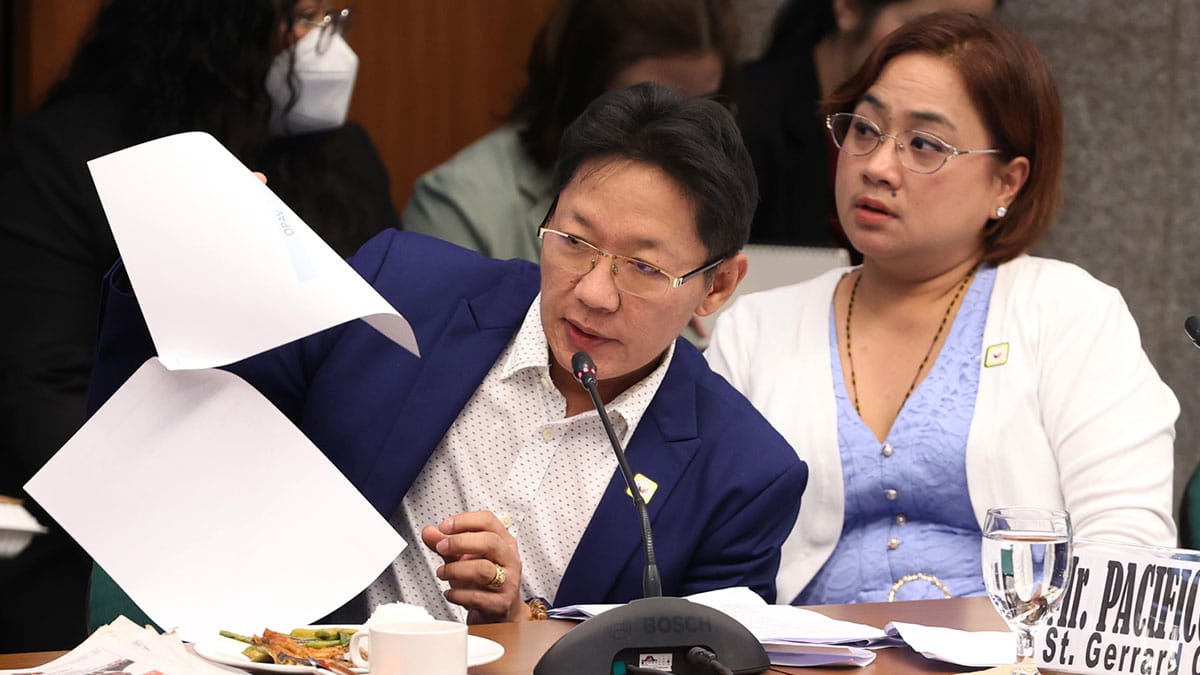
Current investigations and high-profile legislative hearings are exposing yet another massive network of malversation, linking the Department of Public Works and Highways (DPWH) directly to the upper echelons of Congress and the Senate. The mechanism is simple, brutal, and sickeningly effective: Politicians insert specific projects into the national budget, award those projects to favored contractors (often fronts or entities where they hold a secret stake), and then collect enormous kickbacks—sometimes as high as 40-50% of the total project cost—for ensuring the money flows.
The most damning evidence? The failed flood control projects. Every year, millions, sometimes billions, are budgeted to mitigate the rainy season. And every year, major urban centers and low-lying provinces turn into inland seas. These aren’t just natural disasters; they are man-made catastrophes funded by corruption. The dams don’t hold, the retaining walls collapse, and the drainage systems clog because the cement was watered down, the steel rebar was skimped on, and the money ended up in offshore accounts.
A Legacy of Loot: Since the 1960s
Let’s be clear: this isn’t a new phenomenon or an isolated incident involving a few greedy officials. This is the standard operating procedure for governance in the Philippines, a deeply entrenched disease that has poisoned the system since the 1960s and earlier. Malversation of public funds isn’t a deviation; it is the expected outcome when power is centralized and accountability is absent. Every generation of politician learns the same playbook, ensuring the family fortune grows while public service withers.
The Ghost Projects of Patronage
The corruption is structural, supported by contractors who know the rules of the game. They pay the bribe, build the substandard project, and get a guaranteed stream of future contracts.
Here are a few examples of projects—often redundant, incomplete, or functionally useless—that stand as monuments to this systemic theft:
| Project Name (Fictional) | Location / Scope | Contractor (Fictional) | Issue / Outcome |
|---|---|---|---|
| Bicol River Flood Control Phase 3 | Albay Province | MegaStruct Builders, Inc. | Failed embankment within one year; immediate flooding during first major storm. |
| Quezon City Elevated Bypass | Metro Manila | Solid Earth Construction Group | Road segment incomplete for two years; funds released fully; contractor untraceable. |
| Tondo Pumping Station Retrofit | Tondo, Manila | LAKAS Infra Development | Equipment installed was decades old and failed to meet capacity requirements. |
| Cebu Coastal Reclamation Project | Cebu | Zenith Holdings | Funds diverted after minimal land development; project stalled indefinitely. |
The Bitter End: No Justice, No Return
We know how this script ends. We’ve seen this show dozens of times. The hearings will be dramatic, the witnesses will shed tears, and the media will churn out breathless reports. But when the dust settles, there will be no arrests, and not a single peso of the stolen money will be returned.
Why? Because the system is designed for self-preservation. Our politicians and government officials are not rivals; they are players in a massive, decades-old protection racket. They are in cahoots, and they will protect each other across party lines, family ties, and legislative chambers. To jail one is to risk them all.
The handful of genuinely good, committed public servants are helpless because the odds stacked against them are overwhelming. These odds are not merely political opposition; they are the very pillars of the corrupt state:
- Political Dynasties: Nearly 80% of legislative positions are controlled by families who have been in power for generations, ensuring loyalty and blocking genuine reform.
- Lack of Judicial Independence: High-profile corruption cases drag on for decades in courts, often collapsing due to technicalities, witness intimidation, or political pressure.
- The Power of Patronage: The corrupt system controls jobs, contracts, and social services, making it nearly impossible for ordinary citizens and local officials to speak out without risking their livelihoods.
- Controlled Oversight: Watchdog agencies are often underfunded, toothless, or deliberately staffed by people loyal to the political elite being investigated.
The anger of the Filipino people is palpable. We are tired of the poverty created by this institutional theft. We are tired of being treated like collateral damage while the “Nepo Babies” spend our tax money on champagne.
If the ruling class believes they can continue to steal with impunity, if these sham investigations result in the inevitable acquittal and zero accountability, they are severely miscalculating the public’s patience. If justice is not delivered—swiftly and definitively—history shows us what happens when a frustrated populace loses all faith in its government. The Philippines risks a fate not unlike the Nepalese Revolution, where deep-seated corruption and inequality finally sparked a radical, irreversible breaking point.
The time for performance theater is over. Give us justice, or face the fury of the people.
https://www.inquirer.net/456110/live-updates-sept-25-senate-hearing-on-flood-control-projects



Leave a comment